
Quick Links




Electrical Distribution Newsletter | October 2026

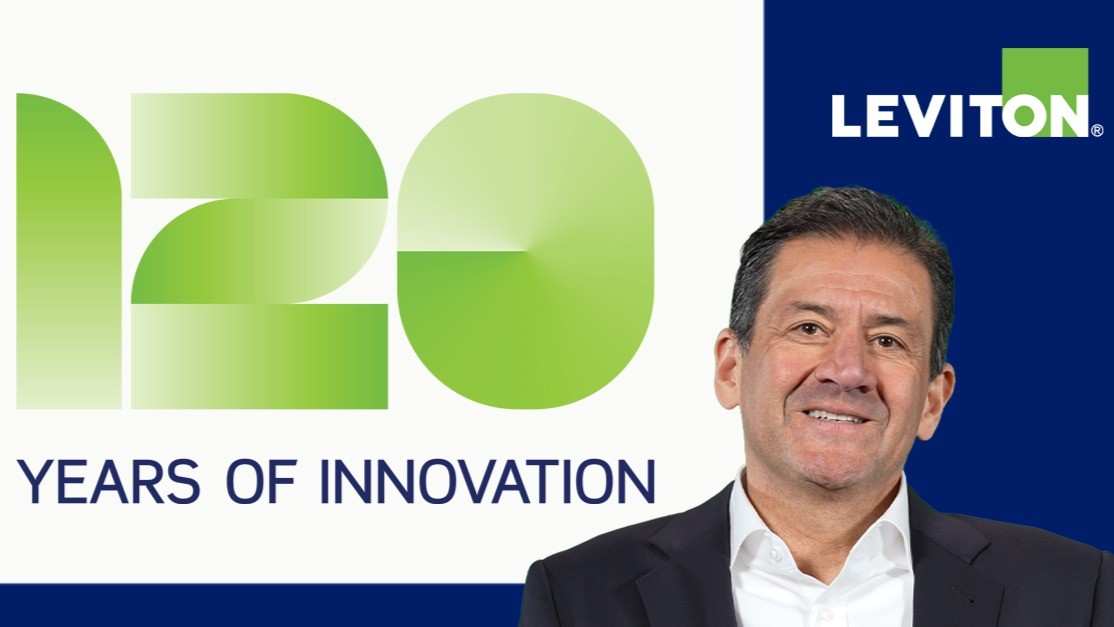

The Three Things That Drive Innovation at a 120-Year-Old Company
Most companies don't make it to 120 years. They either get disrupted, acquired, or simply outrun by the world they helped build.
As Leviton celebrates its 120th year in business, I've been thinking about why the company is different, not as an exercise in nostalgia, but because the forces testing every company right now are immense.
I'm often asked what our secret is by customers, partners, and industry peers alike. How does a company founded in 1906 continue to innovate and stay relevant?
The honest answer is that it's not just one thing. But when I reflect on what's kept Leviton in business through recessions, pandemics, world wars, and now tariff disruptions, I keep coming back to three beliefs that are as true today as they were when this company started.“We see the NECA Convention as a great opportunity to connect with the nation’s electrical contractors to solicit their feedback and understand their challenges,” shared Steve Doty, Leviton’s Senior Manager of Contractor Marketing. “Our ongoing discussions with contractors help us understand the market so that we can develop the targeted Leviton products, services, and training opportunities that will truly meet contractors’ needs and help build the next generation of electrical professionals.”
1. Anticipate What's Next Before It's Obvious
I've seen it happen in our own industry. Companies with great products, strong customer relationships, and healthy balance sheets disappear, not because the market moved on them, but because their leadership didn't plan for what came next. Without a plan, the easiest decision becomes selling. And once you sell, the story ends.
Leviton has survived 120 years in part because we've always treated the question of "what's next" as existential, not just aspirational.
This belief drives how we invest. Before the AI-driven data-center boom arrived, we first committed to making strategic acquisitions in the fiber and copper cabling industry and secondly invested millions to expand our fiber-optic manufacturing facility in North Carolina. We believed the infrastructure need was coming, and we had a responsibility to be ready when it did. That investment has since become one of the most important strategic moves we've made.
The same thinking drove our entry into the load center market in 2017, a category dominated by entrenched competitors. We were seeing significant changes in the national codes and standards for this load center category and decided it was the right time for us to enter this market. We look for where the world is heading and build capacity to meet it.
2. Our Biggest Threat Wasn't a Competitor. It Was Losing Our Identity.
Early in my time leading Leviton, I saw what was happening to other manufacturers. Brands built over decades were quietly being displaced by private-label substitutes. Customers couldn't always tell the difference, but the brand that had earned their trust was no longer what they were buying.
That's what drove us to act and restructure the company. This wasn't just a small adjustment, but a fundamental reorganization from a function-first structure to one built around markets and customers.
We created dedicated business units focused on residential, commercial, industrial, lighting, and network segments. We unified our brand identity: one logo, one website, and one set of packaging standards.
But we also made a conscious decision to get in front of our customers and immerse them in our brand and products, but most importantly, our people. Today, we have live experience centers across the country where customers can see, touch, and engage with what we build.
Another major strategic investment we made during this transition was in our sales organization. Our frontline sales team, which was traditionally composed of generalists calling on distributors, contractors, and builders alike, was completely recalibrated. We created highly specialized sales teams dedicated to specific customer segments, including dedicated distributor, contractor, and builder teams which enable us to deeply understand, listen, and respond to their unique challenges.
That investment in our brand and the experience we provide is priceless. In a business that can become so commoditized, we are proud that the Leviton name is not only still standing, but relevant to the challenges our customers are solving every day.
3. Build a Culture That Runs Toward Challenges
The first two beliefs shape what you build and who you build it for. The third determines whether any of it holds up when the pressure is on.
Leviton's internal rallying cry is simple: We Make It Happen. Those four words have carried us through the 2008 housing crisis, through the COVID-19 pandemic, and through the tariff uncertainty we're navigating today. What they mean in practice is that we don't retreat when conditions get hard. We run toward the problem.
That same spirit shapes how I think about the skilled trades shortage, perhaps the most urgent challenge facing our industry. Every year, approximately 10,000 electricians retire, while only 7,000 enter the workforce. That gap is real, it's growing, and it's a chokepoint not just for Leviton but for the entire electrification of America.
For me as a CEO, this is both a business issue and a deeply personal one. We can't sell products that no one is trained to install, and the industry can't electrify America without the people to do the work. But it's also about something bigger. I believe working with your hands, whether in a factory, as an electrician, or in any skilled trade, is an honorable profession. One that this country has undervalued for too long.
We're working to change that. Through NEMA, NECA, our own training programs, and next-gen events designed to meet young tradespeople where they are, not just to teach them our products, but to help them build better businesses and better careers.
The 120-Year Lesson
The spaces where people live, work, and connect have never been more central to our world, or more dependent on the infrastructure behind them. The companies that will lead through this era aren't the ones with the most resources. They're the ones with the clearest vision of where the world is heading, the discipline to build listening into how they operate, and the cultural resilience to run toward disruption instead of away from it.
For 120 years, we've learned that anticipating the future, staying close to the customer, and building a culture of enduring ingenuity are the real foundations of a company that lasts.
Hard work still trumps talent. That's a lesson we've carried for over a century, and one that remains just as true today.
If you're building something, whether it's a company, a career, or a team, those three beliefs are a good place to start.