
Choosing the right floor box depends on a few core factors: floor construction, installation location, accessibility needs, and durability.

How Do I Choose the Right Floor Box for My Electrical Project
Key Factors to Consider
Before selecting a floor box, think about:
- Floor construction: Is it concrete? Wood? Etc.? This is the most important factor.
- Location (level of building): Ground level or upper floors can affect installation method.
- Access needs: Will power/data be accessed frequently, or occasionally?
- Load and traffic: Will the box sit in a high-traffic area requiring durability?
- Aesthetics & finish: Some installation requires a low-profile or concealed look.
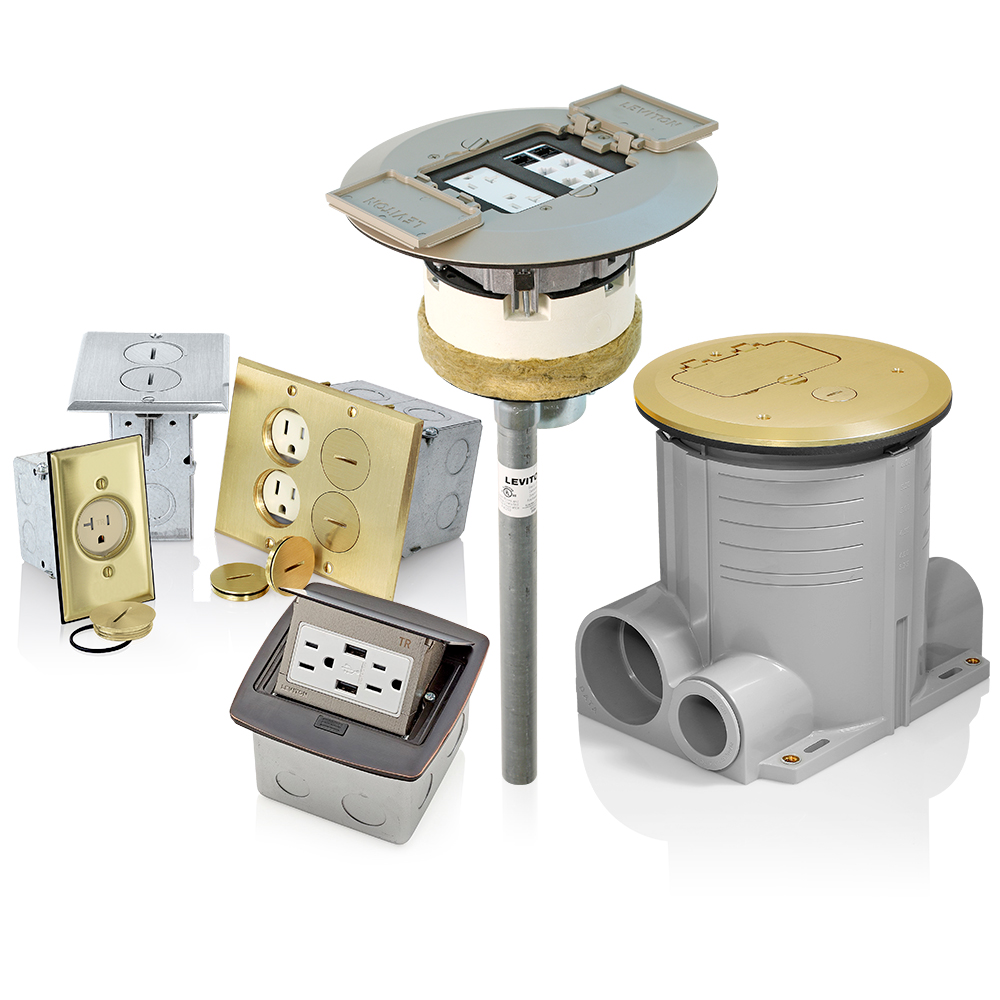
Main Types of Floor Boxes
Concrete Floor Boxes
- Best for: Ground level and above
- Floor construction: Concrete
- Use cases: Offices, retail spaces, open concrete slabs
Wood Frame Floor Boxes
- Best for: Any floor level
- Floor construction: Wood
- Use cases: Homes, wood-frame offices, raised flooring systems
Poke-Through Floor Boxes
- Best for: Floors above ground level
- Floor construction: Concrete
- Use cases: Office towers, renovations, multi-floor layouts
Pop-Up Floor Boxes
- Best for: Any level
- Floor construction: Wood or concrete
- Use cases: Conference rooms, living spaces, areas where appearance matters
Quick Selection Tips
- Choose concrete floor boxes for durability in permanent concrete installations.
- Use poke-through boxes when routing wiring between floors.
- Go with wood frame boxes for wood-based construction.
- Select pop-up boxes when you want a clean, modern, low-visibility solution.
For more information, visit Leviton.com/floorboxes.