
Commercial buildings rely on plugged-in devices, from monitors and printers, task lights, and breakroom appliances. Even when these devices are not in use, many continue to draw electricity. Plug load control, also called receptacle control, helps reduce this waste by automatically turning selected receptacles off when a space is vacant or during scheduled periods, while supporting energy code compliance.

Plug Load Control: A Simple Way to Reduce Energy Waste
What Are Plug Loads?
Plug loads are devices connected to standard electrical receptacles. Many still draw energy when idle, in standby mode, or turned off. These hidden energy users, often called “vampire loads,” are part of plug and process loads, which account for about 28% of energy use in commercial buildings.
Common plug loads include:
- Task lighting
- Computers and monitors
- Cell phone and laptop chargers
- Printers and copiers
- Personal fans and heaters
- Audio and visual equipment
- Coffee makers and other small appliances
How Plug Load Control Works and Control Strategies
Plug load control uses a control device to turn designated receptacles on or off based on occupancy or a schedule.
Occupancy-based control uses a sensor signal to turn receptacles off when a space becomes vacant. Options include Smart Ceiling Mount Sensors, Wallbox Sensors, and GreenConnect Wireless.
Schedule-based control turns receptacles off during programmed periods, such as after business hours. EZ-MAX® H Relay Panels are Leviton’s solution for schedule-based control.
What Do Energy Codes Require for Plug Load Control?
Energy codes such as ASHRAE 90.1, IECC, and California Title 24 include requirements for controlled receptacles. These requirements vary by code, but address how many receptacles must be controlled, where they are located, which control methods are allowed, and how they are marked.
ASHRAE 90.1 2025
- Required in offices, conference rooms, break rooms, classrooms, workstations, modular furniture
- 50% of receptacles in covered spaces and 25% of modular furniture circuits must be controlled
- Control through occupancy sensing, scheduling, or automation
- Shut-off within 20 minutes of vacancy
- Manual override limited to 2 hours
2024 IECC
- Required in general building areas requiring controlled receptacles
- Installed within 12 inches of an uncontrolled receptacle
- Control through occupancy sensing, scheduling, or automation
- Shut-off within 20 minutes of vacancy
- Manual override limited to 2 hours
2025 California Title 24
- Required in office areas, lobbies, conference rooms, kitchens, copy rooms, and hotel/motel rooms
- Controlled receptacles required within 6 feet of uncontrolled receptacles
- More than 50% of guest room receptacles must be controlled
- Control through occupancy sensing, scheduling, or automation
- Shut-off within 30 minutes of vacancy for guest rooms
- Manual override limited to 2 hours
Split vs. Fully Controlled Receptacles
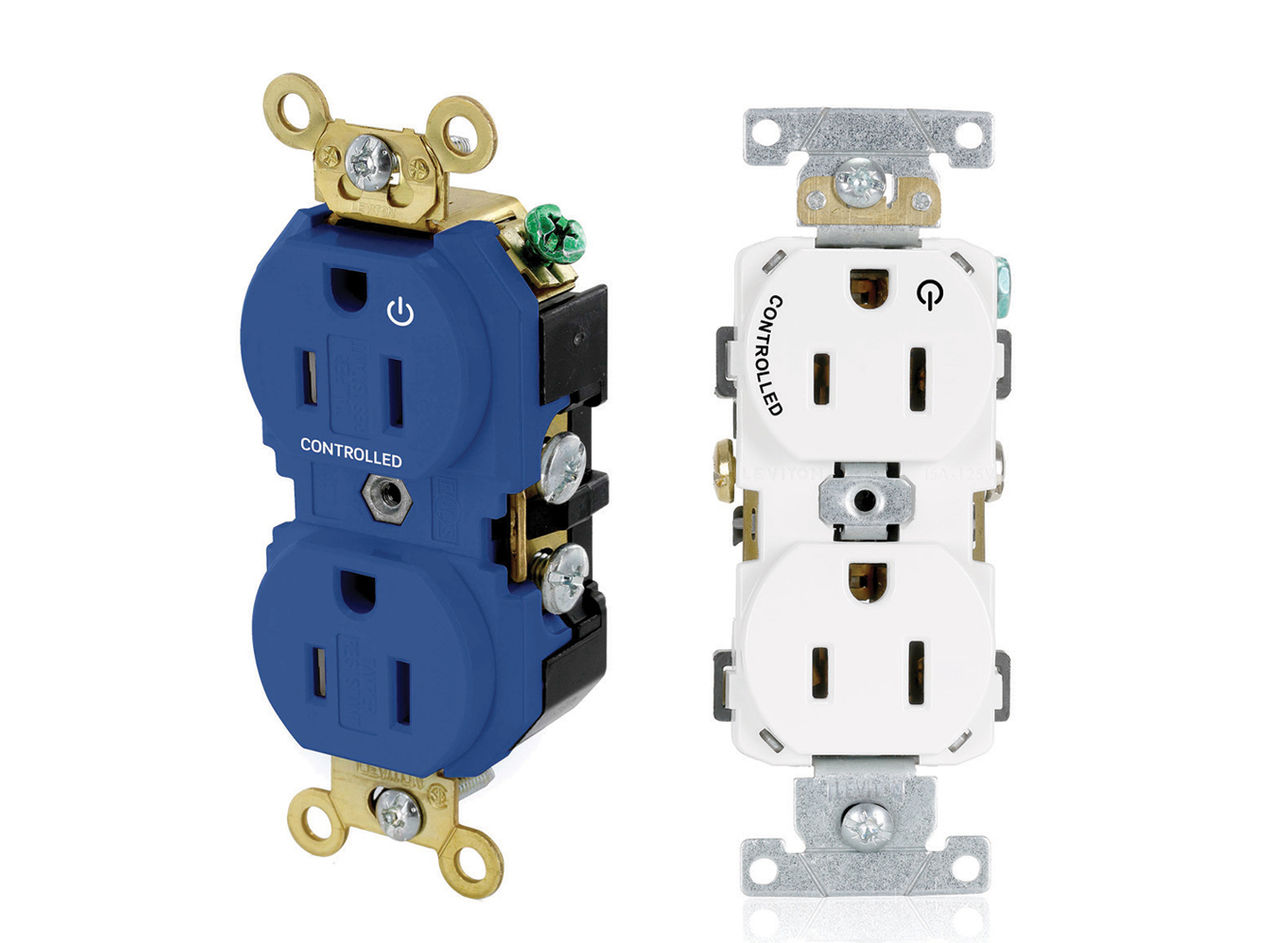
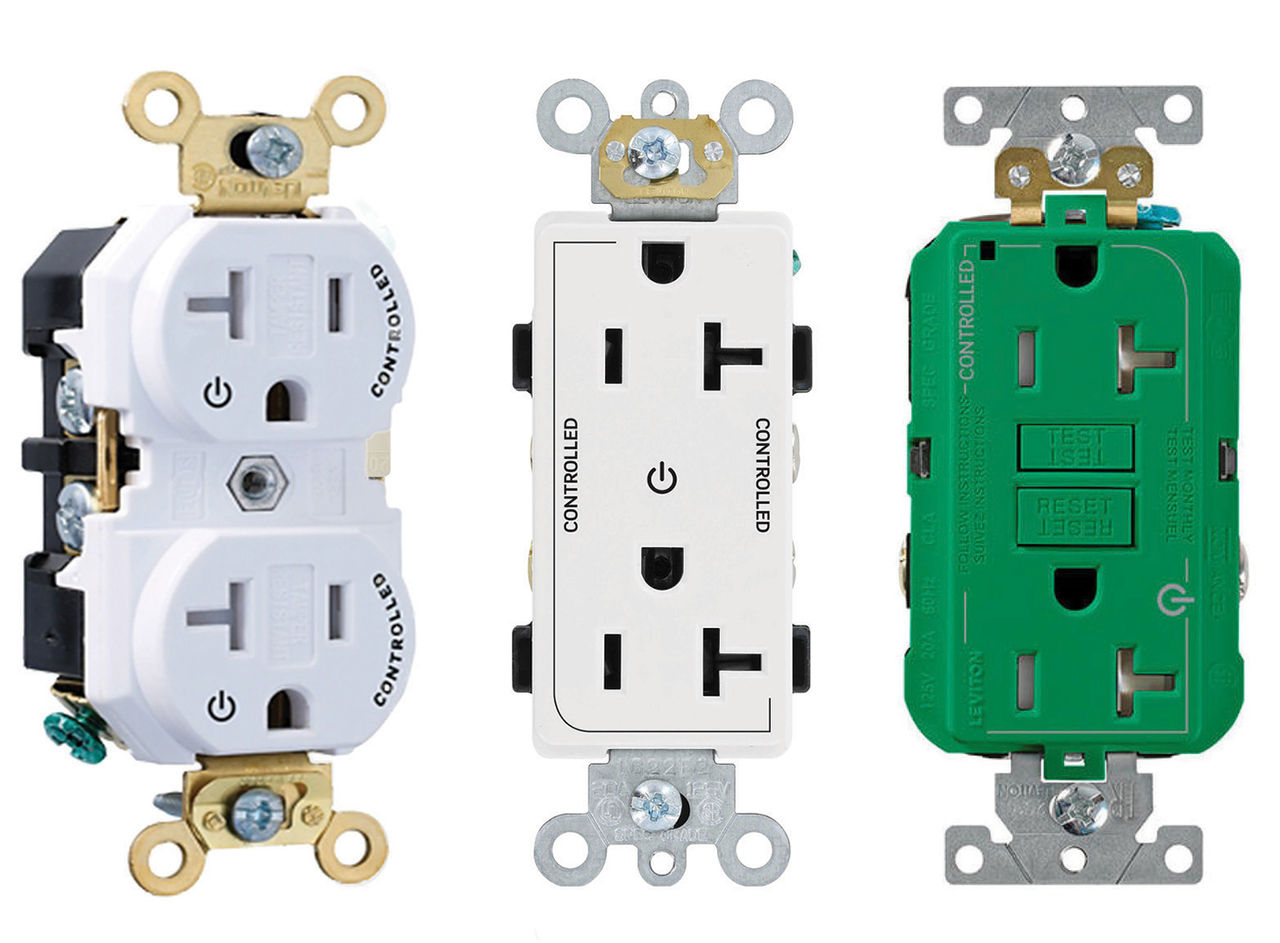
Split Circuit
Full Controlled
There are two options for controlled receptacles, split-controlled and fully controlled. The best choice depends on how the space is used and which devices must remain energized.
When Should You Use a Split-Controlled Receptacle?
A split-controlled receptacle provides controlled and continuous power in one location. One outlet is automatically controlled, while the other remains on for equipment that needs uninterrupted power. This is useful where occupants need access to both controlled and continuous power.
When Should You Use a Fully Controlled Receptacle?
A fully controlled receptacle places all outlets under automatic control. It is best suited to noncritical equipment with predictable use. Because every outlet is controlled, spaces using fully controlled receptacles should still provide access to uncontrolled receptacles for devices that must remain energized.
Choosing and Planning the Right Plug Load Control Solution
The right plug load control approach depends on the space, connected equipment, operating schedule, and code requirements.
Leviton offers marked controlled receptacles, control sensors, and solutions for a range of commercial spaces. Whether the project calls for occupancy-based control, schedule-based control, or a combination of strategies, selecting the right receptacle and control method can make plug load control easier to apply and easier to use.
Learn more about Leviton Plug Load Solutions.