
Loading...
Blog: Copper Structured Cabling Beyond 100-meters

Copper Structured Cabling Beyond the 100-Meter Limit

Why network technology trends emphasize extended reach

For decades, the 100-meter limit for structured cabling shaped how buildings were designed, how networks were planned, and where telecommunications rooms were placed. It worked because networks were centralized, devices were predictable, and most endpoints lived indoors.

That reality no longer exists.

Today’s networks must support thousands of connected devices, deliver power and data to the edge, and extend reliably into outdoor and hard-to-reach spaces. As a result, one of the most important trends in modern network infrastructure is the move beyond the traditional 100-meter limit for twisted-pair copper cabling.

This shift isn’t about breaking standards for the sake of it. It’s about adapting network design to how buildings, campuses, and enterprises actually operate today. 

The 100-Meter Rule: Where it Came From - and Why it's Being Challenged

The 100-meter limit was established to ensure predictable performance for twisted-pair Ethernet. It allowed standards bodies to define worst-case scenarios for signal loss, noise, and power delivery, ensuring interoperability across vendors and generations of equipment.

For many years, this made perfect sense. Networks were:

  • Built around centralized telecom rooms
  • Designed for office workstations and phones
  • Largely confined to temperature-controlled indoor spaces

But modern networks no longer fit that model. So, what exactly has changed?
Devices are Moving Farther from the Network Core

Today’s wireless access points are no longer clustered neatly inside office floors. They’re increasingly located:

  • On building exteriors
  • Across parking structures and campuses
  • In warehouses, stadiums, and industrial spaces
  • At the “edge” of smart buildings

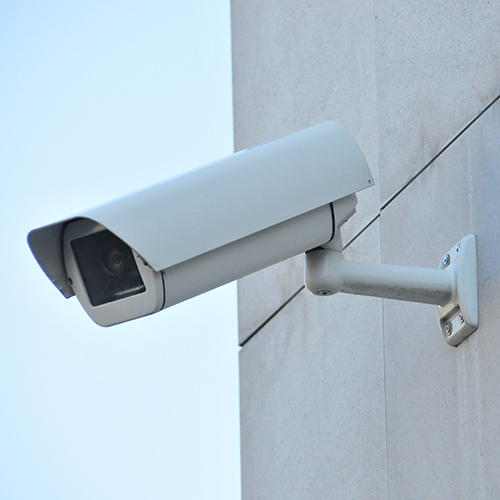
Security cameras, Wi-Fi® access points, sensors, and access control devices are often installed exactly where network closets aren’t.

Adding new telecom rooms just to satisfy distance limits is expensive, space-intensive, and often impractical.

Power is Now as Important as Data

Power over Ethernet has fundamentally changed network infrastructure design. The same P​​​​ower over Ethernet cable now delivers:

  • Data connectivity
  • DC power for devices
  • Support for increasingly power-hungry endpoints

As Power over Ethernet levels increase, distance becomes a more complex challenge. Power loss, cable resistance, and temperature all affect how far Ethernet links can reliably reach.

This has made distance planning a system-level problem, not just a cabling question.

Smart Buildings Demand Edge Connectivity

Smart building technology depends on distributed connectivity. Systems for:

  • Lighting
  • HVAC
  • Security
  • Occupancy and environmental sensing

…all rely on Ethernet connectivity to reach deep into the building and beyond its perimeter.

The result is a clear trend: networks are extending outward, while telecom rooms are being consolidated or reduced.

Sustainability and Efficiency are Driving Design Decisions

Fewer telecom rooms mean:

  • Less construction

  • Lower material usage

  • Reduced cooling and power demands

  • Simpler long-term operations

Modern network design increasingly prioritizes:

  • Fewer active spaces
  • More efficient layouts
  • Infrastructure that can adapt without major rebuilds

Extending the reach of copper structured cabling systems - when done correctly - supports these goals.

Why “Just Pushing Cable Longer” Isn’t the Answer

It’s important to be clear: extending the distance of your copper structured cabling isn’t about ignoring physics or standards.

As channel length increases, several factors become more pronounced:

  • Insertion loss reduces signal strength
  • Delay skew affects timing between wire pairs
  • Power over Ethernet losses increase resistance and reduce delivered power
  • Temperature changes amplify all of the above

This is why many “extended reach” claims in the market fail in real-world conditions. Performance at room temperature in a lab does not equal reliability across seasons, environments, and equipment lifecycles.

The trend in modern network infrastructure isn’t about chasing maximum distance. It’s about engineering predictable, validated distance ranges that work in real deployments.

The Real Trend: System-Level Network Design

One of the clearest shifts in network infrastructure strategy is the move away from isolated component decisions and toward system-level thinking.

Instead of asking:

“How far can this cable go?”

Designers are asking:

  • What speed is required at the endpoint?
  • How much power does the device need?
  • What environment will the cable operate in?
  • How many connections and transitions exist?
  • How will this perform over time?

This approach to network infrastructure design acknowledges that distance, speed, power, temperature, and topology are interconnected - and must be evaluated together.

Looking Ahead: Distance as a Design Variable, not a Constraint

One of the defining trends in modern network infrastructure is the shift from rigid rules to informed design choices.

Distance is no longer a hard stop. It’s a variable — one that can be managed through:

  • Thoughtful system architecture
  • Validated performance ranges
  • Environment-aware planning
  • Standards-based, future-ready infrastructure

Networks that embrace this mindset are better positioned to scale, adapt, and support the connected environments of tomorrow.

For more on extended distance, as well as a look into Leviton's PARADIGM™ system for successful long-term extended distance deployment, check out leviton.com/extendeddistance.