

By Ross Goldman
Chief Operating Officer, Leviton Network Solutions | Chief Sustainability Officer, Leviton
Volume 17 | Issue 4 | 2026

Building Ahead of the AI Roadmap: Why We Are Investing $100M in High-Density Infrastructure
AI compute gets all the attention.
Hyperscalers are committing tens of billions of dollars to GPUs. Commercial building developers are racing to integrate localized AI and smart automation. IT leaders across both data centers and enterprise facilities are facing the same fundamental question: Can our physical network infrastructure handle what comes next?
Recently, Leviton announced a $100 million investment in our manufacturing capacity for end-to-end copper and fiber systems. This significant investment builds directly on the success of our previous $80 million capital program completed in 2025.
In my years working at the forefront of technology and network infrastructure, I have rarely seen the physical layer under this level of simultaneous demand from multiple directions at once. That is precisely why we are accelerating and continuing major investments in our global business.
While many organizations remain cautious amid volatile raw material and energy costs, Leviton believes this is the right time to invest, ensuring our customers have access to the capacity, quality and global scale they need when they need it most.
Dual Infrastructure Realities: Extreme Cable Density, Dizzying Network Speeds and Imminent Labor Gaps
Whether managing a high-density data center or a modern commercial campus, infrastructure executives face the same parallel headwinds. Some stats from AFCOM’s 2026 State of the Data Center provide staggering context.
- Unprecedented Rack Density: Average rack density surged nearly 70% in a single year to 27 kW per rack, with 69% of operators expecting densities to climb even higher. Packing more computing into smaller footprints demands ultra-high-density optical patching with manageability.
- Workforce Gaps: 87% of operators report workforce gaps impacting daily operations. Finding specialized technicians to pull, terminate, test, trace and maintain thousands of cables, connection by connection, is putting multi-billion-dollar deployments behind schedule.
- Surging AI Workloads: 72% of data center operators expect AI workloads to increase capacity requirements this year. Enterprise environments are simultaneously adopting Wi-Fi 7, localized AI vision and advanced building management systems, all demanding high-speed, reliable fiber and copper backbones.
Why We Are Investing $100 Million Across Two Core Fronts
This investment targets two distinct but equally urgent infrastructure realities. First, in the hyperscale data center environment, AI workloads are pushing physical density and deployment schedules to new extremes. Second, in the enterprise smart building environment, aging infrastructure blocks the edge deployments required by an AI network’s expanded footprint. Different problems, same urgency, same commitment.
1. High-Density Data Center Systems and Workforce Relief
With 87% of operators struggling with labor shortages, this investment directly helps reduce some of the most challenging installation complexities installers face. Making installation, terminations and testing easier is the most effective way to minimize concerns over field labor shortages.
By expanding production of our 800G-ready STRATA™ fiber cabling systems, we are scaling our ability to deliver factory-tested, pre-terminated trunk assemblies that arrive on-site ready to deploy. Through our FastLane make-to-order program, our most popular fiber cassettes and cable assemblies ship in less than five business days, meaning installation crews spend their time connecting infrastructure, not building it from scratch on a live floor. The result is high-density fiber deployments completed up to 70% faster, with fewer specialized technicians required on-site.
Our dedicated data center design engineers take this a step further, acting as an extension of your engineering team to pre-optimize rack elevations, port counts and cable topologies before a single product ships. By the time material arrives, the plan is already locked.
2. Next-Generation Smart Buildings and Enterprise LANs
AI isn’t staying confined to cloud data centers. It is migrating to the edge. Every building is a smart building. But buildings need more than smarter systems. The physical infrastructure underneath was never designed for what modern operations require. The average commercial building in the U.S. is 53 years old according to an SMR research study. These buildings were not constructed for AI-driven capabilities. And when the network is not a solution, it becomes a barrier to progress and productivity.
One of the most persistent and underestimated constraints is distance. As IP devices multiply across larger footprints, we want more flexibility in where these things can be located, including security cameras or blue light phones in the parking lot or wireless access points in remote areas of a warehouse. Standard copper networking has a 100-meter limit, a rule set for a world of compact buildings and centralized telecom closets. As campuses expand, remote devices require connectivity and a 100-meter limitation becomes a design constraint driving additional infrastructure, added complexity, and unnecessary cost facility teams cannot absorb.
In April 2026, Leviton announced the PARADIGM™ Extended Distance System, purpose-built to address this exact challenge. Powered by Stadion outdoor cable and delivering 1G Ethernet and PoE up to 225 meters, PARADIGM enables organizations to connect outdoor IP cameras, wireless access points, access control systems and IoT devices across real-world campus environments without rebuilding their infrastructure from the ground up.
At the 2026 BICSI Winter Conference, we demonstrated a live 200-meter channel delivering power and data to a high-definition security camera, not in a controlled lab but in a real-world system configuration mirroring what facility teams actually encounter on site. That validation matters because infrastructure decisions made today will carry these buildings through the next decade of AI and smart building demands.
This investment directly scales our ability to manufacture and deliver solutions like PARADIGM alongside our Cat 6A and fiber infrastructure, as well as our OneReach™ systems which can deliver power and data up to 10,000 feet.
The goal is the same in both environments. Our customers should be able to modernize their physical facilities in lockstep with their digital strategies, without the infrastructure itself becoming an obstacle.
Building What’s Next for Your Network
Capital investments like these are not just about adding capacity. They are about building long-term capability and service. Our customers are planning infrastructure for decades of AI-driven growth and productivity. We’re matching that vision with the foresight to invest in world-class manufacturing, even in challenging market conditions.
With 120 years of company history and 60 years of dedicated network innovation, we know the leaders in any technology cycle are the ones who build for the next one.
Subscribe Today
Like what you’re reading? Get more industry news and trends in our quarterly newsletter when it’s hot off the press.
Leviton Poll
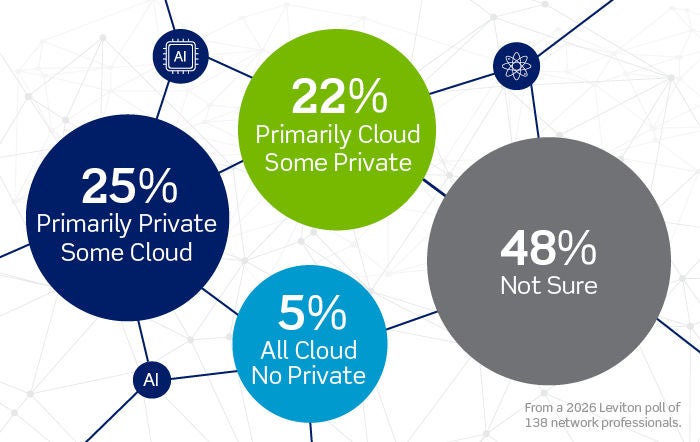
What type of AI cluster environment do you expect to use or build?
What’s in a Product? Why Product Lifecycles Matter for Your Business
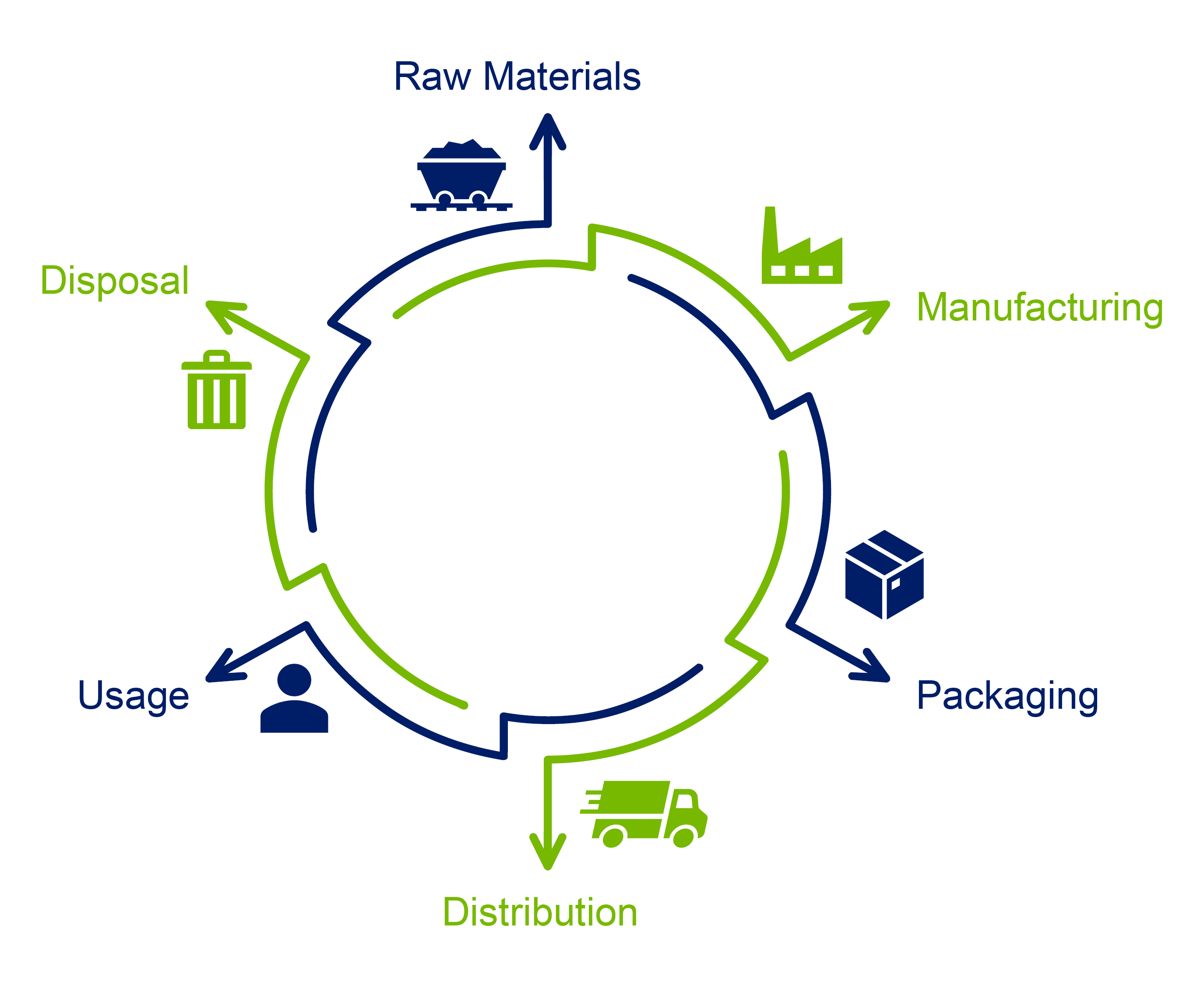
Every part of a product has its own sustainability journey. From raw materials to manufacturing, from usage to disposal, each stage has its own environmental impacts that contribute to the overall footprint of that final product. It’s a granular way to look at sustainability, we’ll give you that, but managing the product lifecycle from start to finish can have a major impact on your organization's sustainability efforts.
Getting the “complete story” requires examining impacts throughout the sixstage product lifecycle: raw materials, manufacturing, packaging, distribution, use, and end-of-life disposal. Collecting accurate data across each stage can be challenging, which is where third-party verification becomes valuable. Whether through consultant-led assessments or specialized software platforms, organizations can develop and verify a life cycle assessment (LCA) and produce an environmental product declaration (EPD). An LCA evaluates the environmental impacts associated with a product throughout its lifecycle, while an EPD transparently communicates those impacts using standardized, comparable, third-party verified data.
But why go through all this effort to gain an accurate picture of a product's environmental footprint?
Organizations pursuing sustainability goals can use LCAs to identify opportunities for improvement across product design, sourcing, manufacturing, packaging, transportation, and end-of-life management. By understanding where environmental impacts occur, they can make more informed decisions and drive meaningful improvements. EPDs, meanwhile, build trust throughout the supply chain by providing customers, partners, specifiers, and stakeholders with transparent, independently verified information about a product's environmental performance.
LCAs and EPDs are ultimately decision-making tools, both for your organization and the organizations that seek to do business with you. For more on how to create and utilize LCAs and EPDs, and how they can support better design decisions, stronger customer conversations, and more competitive project outcomes, register for our upcoming webinar.
Spotlight: Cut Jobsite Waste with Sustainably Smart Packaging
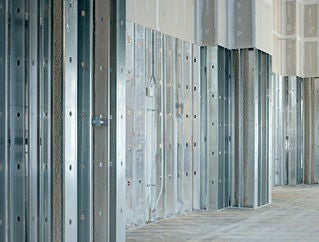
Ever think about just how much waste is produced on a job site? How much time and effort is spent unwrapping each component before you can even start installing, or how much plastic is piled onto the local landfill after each project ends? It’s a problem; one that Leviton’s Sustainably Smart Packaging is designed to solve.
Smart packaging cuts jobsite waste by addressing the problem at its source: materials that arrive on the jobsite before construction even begins. When packaging is designed to be minimal, recyclable, reusable, or biodegradable, the downstream waste footprint shrinks dramatically.
Sustainably Smart Packaging means:



Learn more about how Sustainably Smart Packaging unlocks less mess and less stress.
News You Can Use


Tech Tips: Cable Slack for Category-Rated Copper Cabling
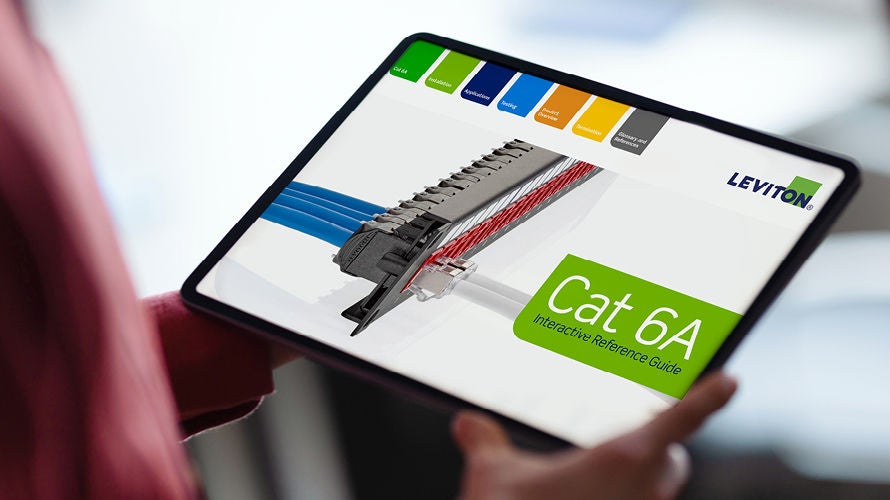
Proper cable slack is an important part of a reliable, standard-based structured cabling installation. Slack provides serviceability for future moves, re-terminations, maintenance, and equipment changes; however, excess cable must be planned and managed correctly. For category-rated copper cabling, poorly stored slack can affect electrical performance, field certification results, and long-term system reliability.
As a general installation practice, allow enough slack to support future service without creating unmanaged loops or tight coils. Common planning allowances include approximately 10 ft in telecommunications spaces, 3 to 10 ft above the work area outlet in the ceiling, and approximately 8 in. inside the workbox. These values should be adjusted based on the project specification, pathway layout, manufacturer guidance, and the need to remain within the ANSI/TIA-568 length limits.
Slack should not be stored in tight coils, small loops, compressed bundles, or locations where the cable can be pinched. Tight bending or excessive looping can disturb the cable’s internal pair geometry and may contribute to return loss, impedance variation, crosstalk, or other transmission performance issues.
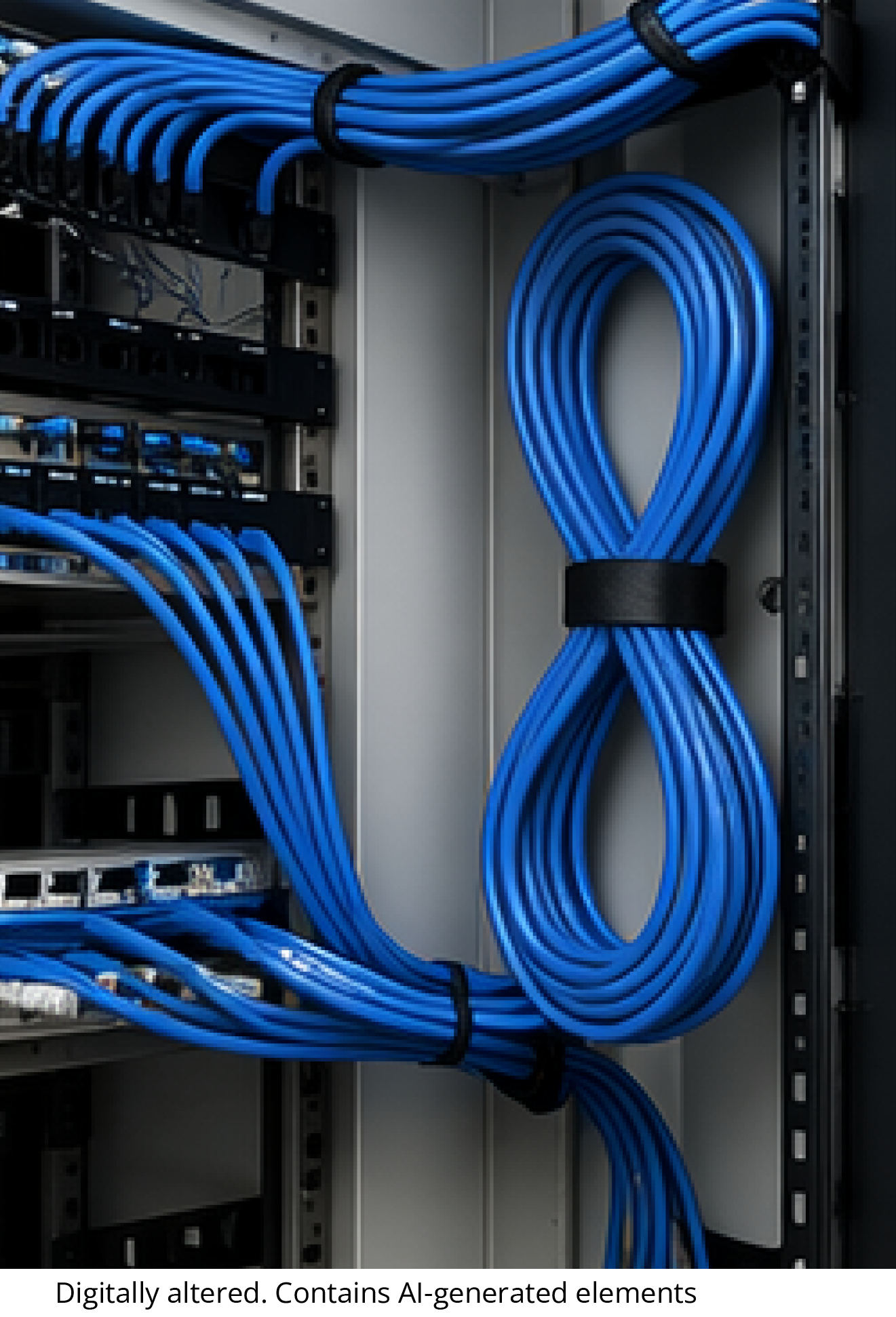
Best practice is to store slack in large, relaxed loops or a figure-eight pattern that maintains the manufacturer’s minimum bend radius and prevents sharp bends, kinks, or compression. Slack should be supported in a way that preserves the cable’s shape and avoids creating stress points at the outlet, patch panel, consolidation point, J-hook, tray, or other pathway support.
Pulling tension is also important. Category-rated balanced twisted-pair cable should not be subjected to pulling force above the manufacturer’s published limit; a commonly referenced maximum is 110 N (25 lbf) per 4-pair cable. Excessive pulling force can distort the cable’s internal geometry, and once that geometry is changed, the cable may no longer perform as intended even if the jacket appears undamaged.
The bottom line is simple: slack is not just extra cable; it is part of the installed cabling system. Leave enough slack for serviceability, include it in the link-length calculation, and store it in a way that maintains bend radius, avoids stress, and protects transmission performance.
Ask the Experts
Category 6 and 6A communication cables are available in multiple constructions; one such difference is whether a cross-filler (filler) is included (examples shown below). Both designs are capable of meeting applicable performance requirements when installed in accordance with manufacturing recommendations and industry best practices. Proper pathway planning, controlled pulling tensions, careful handling, and correct termination practices are critical to achieving consistent electrical performance regardless of cable construction.

Pathway planning
Ultimately, pathway planning must address two critical factors: the amount of tension applied during the pull and the potential for added twist. Both can complicate installation and affect the quality of the final setup. When installation best practices are followed (e.g. maintaining allowable pull tension, minimizing sharp bends, and controlling twist), both filler and fillerless cables can deliver reliable performance and successful certification results. In these conditions, geometry is preserved, pair balance is maintained, and performance margins remain intact.
Tension Consideration
During installation, cable tension must not exceed the manufacturer’s specified limit, typically 110 N (25 lbf). Exceeding this threshold, such as when a cable rubs against a sharp corner or requires excessive force to continue pulling, distorts the cable’s geometry. This distortion often results in sections of the cable becoming oval or flattened, bringing conductor pairs closer together, resulting in potential degraded performance.
Careful Handling
In general, when installation practices are not strictly followed, differences in cable construction become more pronounced. Harsh installation stresses can cause permanent damage to the cable. These issues may arise with both filler and fillerless constructions, regardless of manufacturer. Improper cable pulls can negatively affect electrical performance, and when a star pass/fail result occurs despite correct jack terminations, the root cause is often poor installation practices.
Termination Practices
Fillerless cables terminate more quickly since no filler material needs to be removed. However, even when installed without tension-related issues, poor termination can still result in failures.