
Quick Links








Electrical Distribution Newsletter | March 2026



From Code Requirement to Sales Opportunity: Residential Surge Protection Solutions
One moment, a family is enjoying a quiet evening at home. One child is deep into an online game in the media room, the other is glued to the latest binge-worthy series, while mom is putting the finishing touches on her online store’s big sale.
Without warning, the lights flicker, and a loud crack of thunder rattles the home. In the blink of an eye, a powerful surge is sent throughout the home’s electrical systems. Screens go dark, the Wi-Fi router dies, and the gaming console won’t restart.
The kids are screeching in agony and drama, mom is upset and now several of their electronics are nothing more than paperweights. Dad has a sinking feeling as he realizes how expensive this could soon get. Replacing gaming systems, EV charging units, televisions, networking gear and computers quickly adds up to thousands of dollars.
Even more frustrating is that much of this damage could have been avoided with a simple surge protection strategy designed to protect their electronics.
Gone are the days when plugging electronics into a basic surge strip was enough. Today’s homes are filled with electronics, smart devices, and systems that require comprehensive surge protection. The demand for essential surge protection for modern technology is simply not an option anymore.
Power Surges Cause Immediate and Hazardous Damage
Power surges occur for a variety of reasons, including lightning, transformer malfunctions, power grid switches by the electric utility company, and the turning on and off, on high-powered electrical appliances such as refrigerators or air conditioners.
An electrical boost above 169 volts creates an electrical current arc, generates heat and damages the electronic circuit board and other components. Additionally, small daily surges wear on electrical equipment and reduce their lifespan.
Modern homes contain more electrical components than they did just a few short years ago. Smart home revenue is projected to reach $193.5 billion dollars in 2026, and this trend won’t be slowing for the foreseeable future. The market is expected to have a compound annual growth rate (CAGR) of 23.1% through 2032.
National Electrical Code Changing with the Times
The National Electrical Code (NEC)is changing to accommodate these rising demands. NEC Article 230.67 Surge Protection was introduced in the 2020 code, requiring that all services supplying dwelling units be provided with a Type 1or Type 2 surge protection device (SPD) as an integral part of the equipment or installed immediately adjacent. In 2023, the NEC expanded the requirement list to include dormitory units, nursing homes, guest rooms at hotels and patient sleeping rooms.
Leviton, Your Trusted SPD Brand for Decades
Leviton has been a trusted surge protection brand in homes for decades. By expanding and building Type 1,2, and 3 SPDs, Leviton provides a comprehensive and complete approach for home protection, incorporating the latest in surge technology.
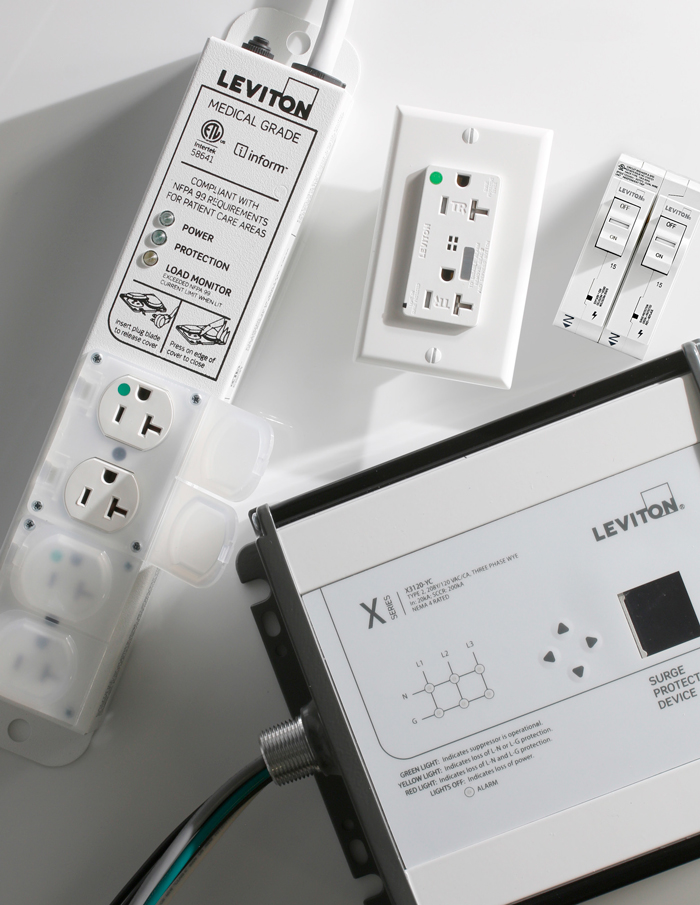
Leviton manufactures the Type 1, Type 2, and Type 3 surge protection devices your contractors need to keep their customers safe and connected.
- Type 1 surge protectors are installed before or at the main breaker panel and protect against external surges. Type 1 devices can also be used in Type 2 applications.
- Type 2 surge protectors provide the same protection as Type 1 but are mounted to the load side of an electric service panel. These devices protect against internally generated, motor-driven surges.
- Type 3 surge protectors are used at the protected equipment, such as TVs, gaming systems, and computers, shielding it from transients serving as the last line of defense.
Leviton Leading the Way
Leviton Load Centers and Breakers: Since 2018, Leviton Load Centers have combined advanced engineering with cutting-edge design. Modern load centers, breaker boxes, circuit panels and fuse boxes offer enhanced safety, durable construction, and unmatched reliability.
Tony Pulsonetti, Leviton’s Sr. Director of Strategy and Planning and Product management for C&I, said, “The panels have the best rating, so distributors and contractors don’t have to think about it. For example, the NEC made a requirement that surge protectors need a 10,000-amp, nominal discharge current rating for dwelling units, and all Leviton surge panels meet that requirement.”
Leviton’s catalog of load center products includes main breakers, main lugs, branch circuit breakers and accessories – for both indoor and outdoor applications. In settings like single-family homes or multi-dwelling units (MDUs), Leviton load centers and breakers are NEC code compatible.
With the MyLeviton app, monitoring homeowner energy usage is so easy. When contractors install the Leviton Whole Home Energy Monitor (LWHEM) in any Leviton Load Center, homeowners can view their energy usage in real time and remotely control the units to give them peace of mind and improve efficiency.
Surge Protective Breakers: For use in the Leviton Load Center, these Type 1 in-panel breakers feature an easy-to-read LED indicator light showing power, protection status and stay lit even if the breaker is off or tripped.
R, S and X Series Panels: Leviton’s SPD panels are NEC- compliant, and contractors can choose the best panel for the needed application.
For use with TVs, computers, and other expensive electronics, Leviton’s Type 3 receptacles are ideal for point-of-use surge protection. An audible alarm sounds when the surge outlet needs to be replaced, giving added confidence.
Surge Protection is Simple but Crucial
Ask your Leviton representative about the whole -home surge protection options for your contractors. Giving a host of code-compliant and dependable surge protection options will go far in solidifying your position as a valuable partner. Leviton Surge Protection Devices are an industry best and carefully crafted to protect end-user homes, electronics and families.