

Types of Straight Blade Receptacles
What are Straight Blade Receptacles?
Straight blade receptacles are the standard electrical outlets most people see every day in homes, offices, and commercial buildings. They accept plugs with flat blades, which is where the term "straight blade" comes from. These receptacles come in a variety of different types and grades.
Types of Straight Blade Receptacles
Standard Receptacles - This is the basic line of electrical outlets that comes in a variety of different grades, voltage types, and NEMA configurations. They are commonly used in general purpose residential, commercial, and industrial applications.
Tamper-Resistant Receptacles – This receptacle includes built in safety shutters that help prevent foreign objects from being inserted into the outlet. The shutters only open when a proper two- or three-prong plug is inserted, making them ideal for homes, schools, and other areas where additional safety is important.
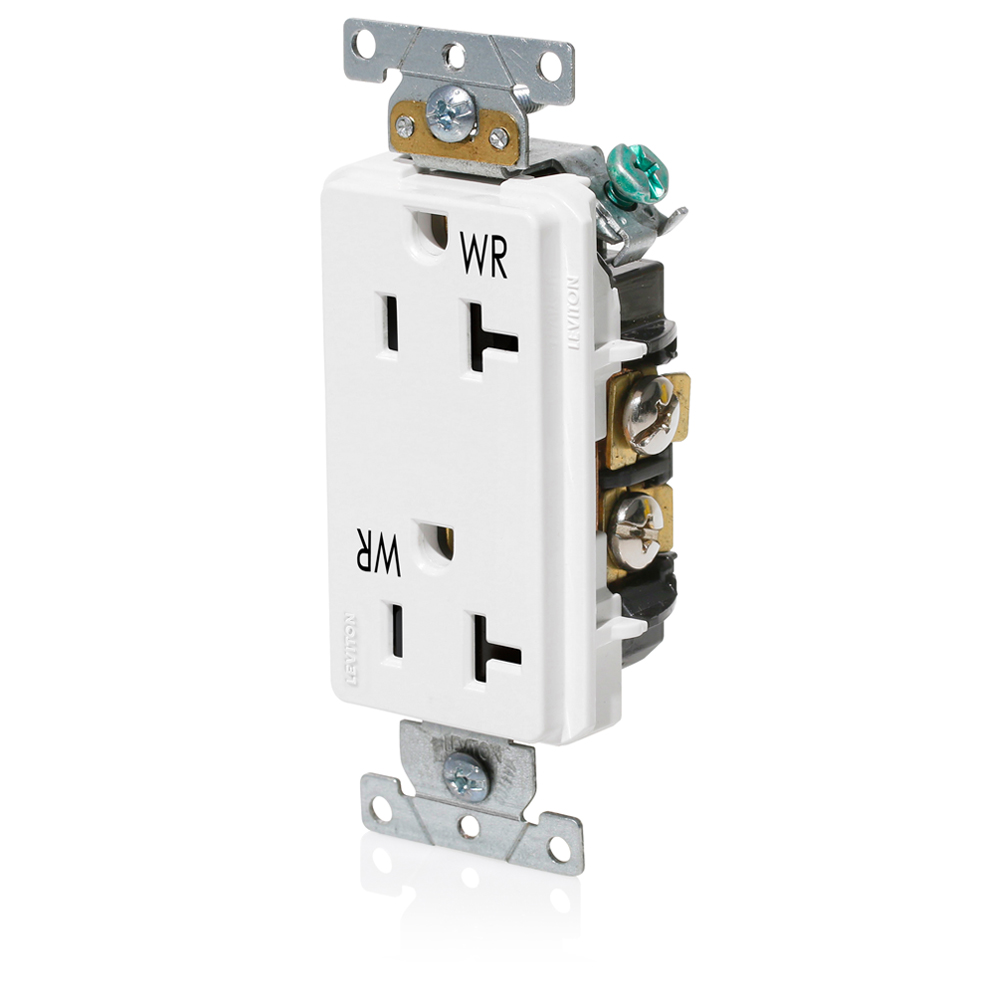
Weather-Resistant Receptacles - These receptacles are designed for wet or damp locations where exposure to the elements is a concern. They offer added protection against corrosion, UV degradation, and cold impact damage to help maintain performance in outdoor environments. They are commonly used on building exteriors, patios, and other outdoor commercial applications.
Hospital Grade Receptacles - Hospital grade receptacles are designed for demanding environments where outlets are used frequently and reliability is important. They are built to meet additional testing requirements and feature stronger plug retention and dependable grounding connections. These receptacles are typically marked with a green dot to show they meet hospital grade standards. While commonly found in hospitals and other healthcare facilities, they are also used in some commercial settings where a more durable outlet is needed.
Surge Protective Receptacles – Surge protective receptacles help add an extra layer of protection for the electronics you use every day. While they look like standard outlets, they are designed to help reduce the impact of power surges that can occur from normal electrical activity. This can help protect devices such as computers, televisions, and other sensitive equipment. Because of this added protection, surge protective receptacles are commonly used in homes, offices, schools, and healthcare facilities.
Marked Controlled Receptacles – These receptacles are connected to a device that can automatically turn the power on or off, such as an occupancy sensor, timer, or wall switch. They're commonly used in commercial buildings to help save energy by reducing power to equipment when it's not being used. A special marking on the outlet lets users know that the receptacle may not always have power available.
GFCI Receptacles – These receptacles are designed to help protect people from electrical shock. Unlike standard receptacles, a GFCI continuously monitors current flow and quickly shuts off power when an imbalance is detected. They are commonly installed in bathrooms, kitchens, outdoor areas, and other locations where water exposure or additional electrical safety protection is a concern.
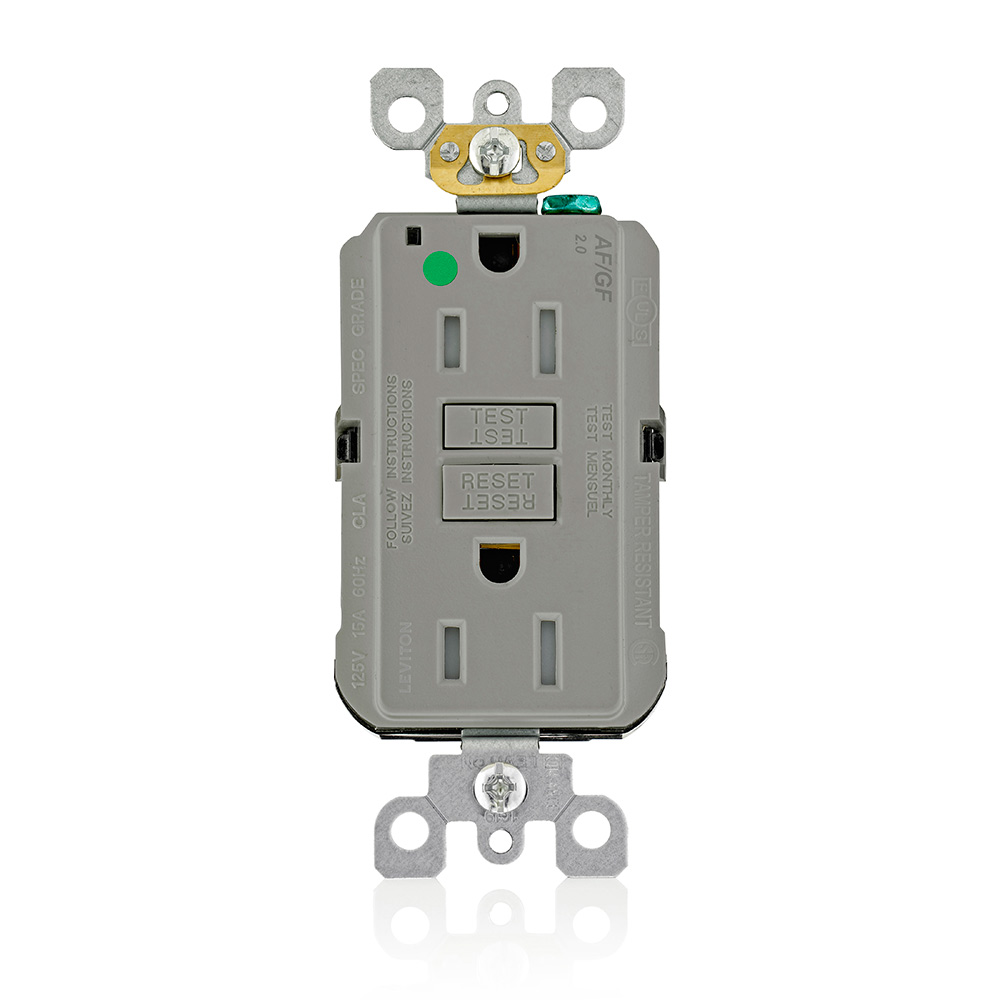
AFCI Receptacles - These receptacles are designed to help reduce the risk of electrical fires. They continuously monitor for hazardous arc-fault conditions and quickly shut off power when one is detected. Because of their added safety benefits, they are often required in many residential applications.
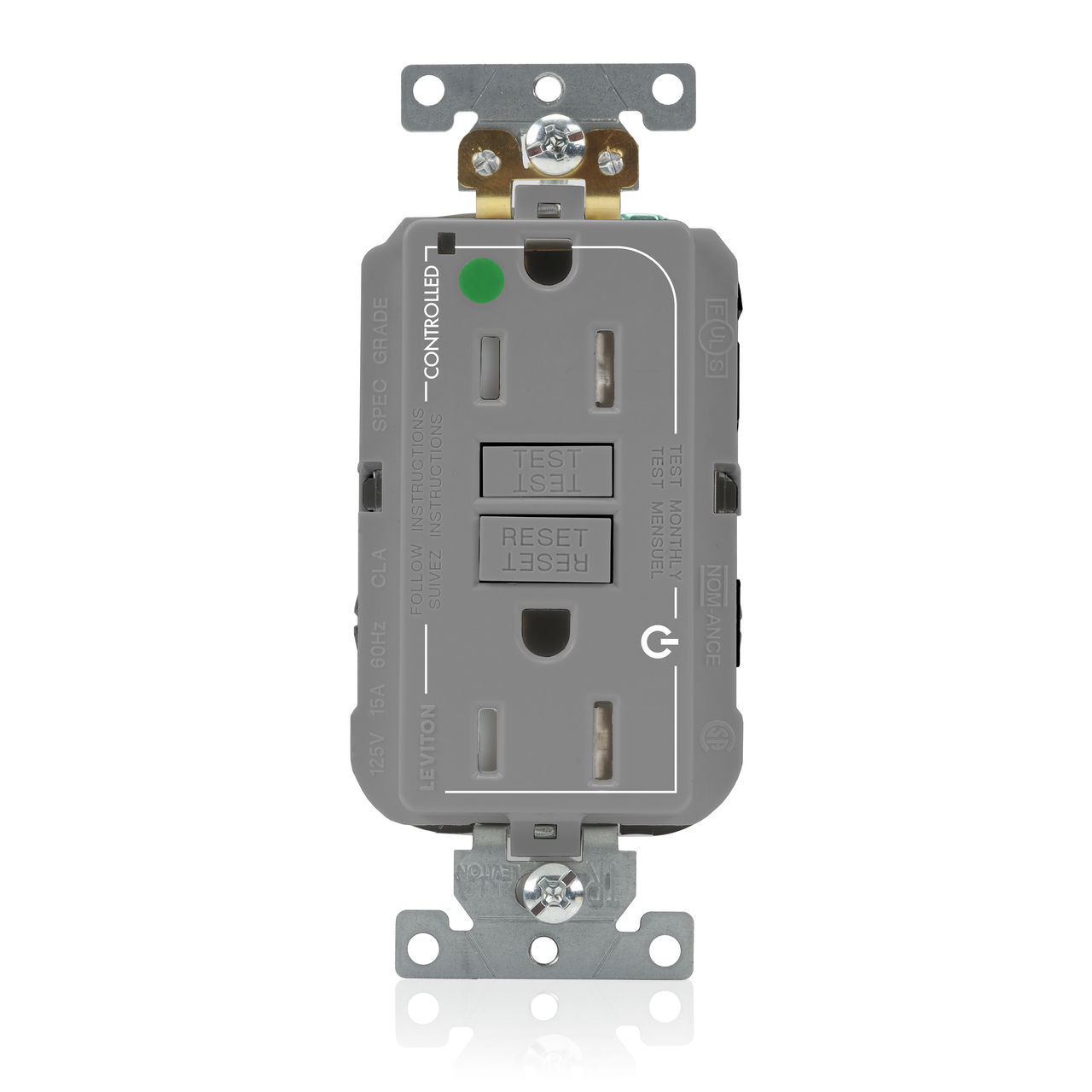
GFCI Receptacle
AFCI Receptacle
Note: The receptacle shown includes both AFCI and GFCI protection in a single device.
Isolated Ground Receptacles - Isolated ground receptacles are designed for locations where sensitive electronic equipment is used. They provide a dedicated grounding path that can help reduce electrical noise and interference that may affect equipment performance. Because of this, they are commonly found in places such as data centers, computer rooms, hospitals, and scientific laboratories where reliable power is important.
Power Indication Receptacles - Power indication receptacles include a built-in LED light that shows when the outlet is receiving power. This makes it easy to quickly check that the receptacle is energized without using a tester. The light provides a clear visual indication that power is available. These receptacles are commonly used in hospitals, healthcare facilities, data centers, and server rooms where reliable power is important.
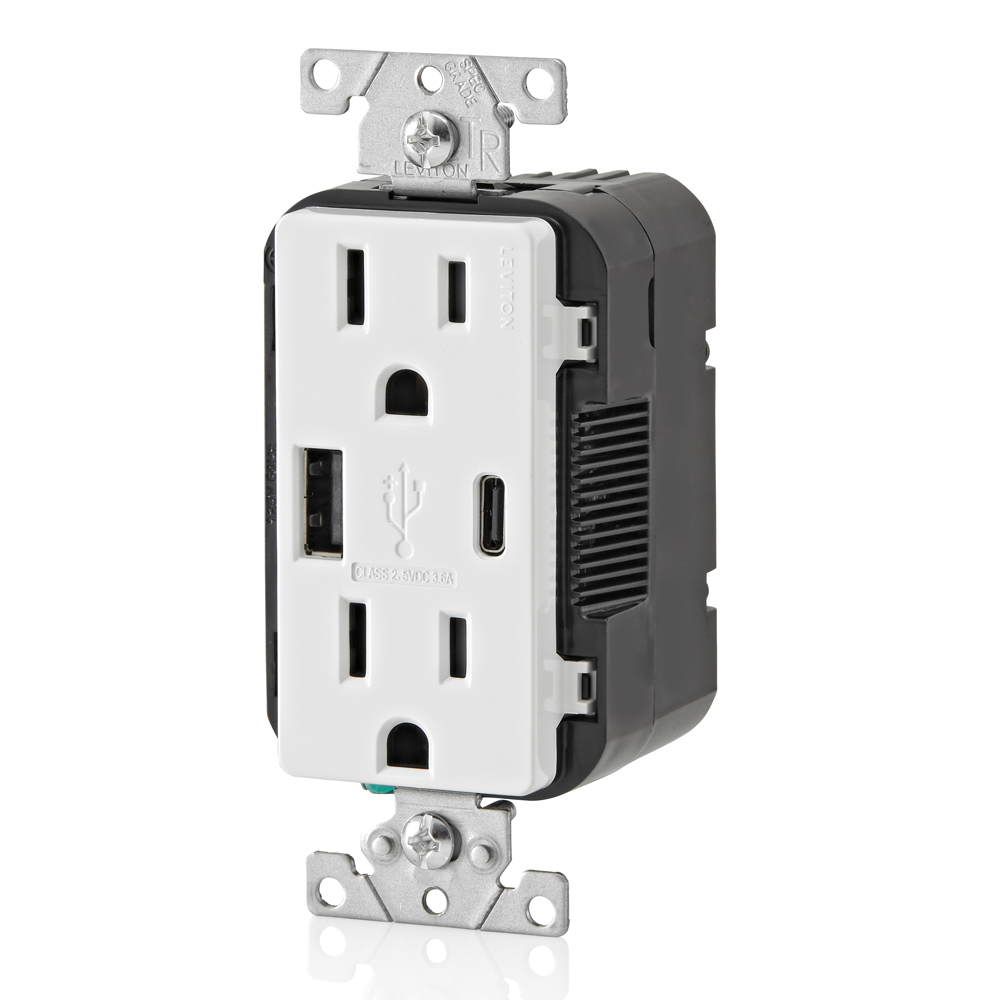
USB Receptacles – USB receptacles make it easy to charge devices by including USB ports right in the outlet. They still work like a regular receptacle, but you can also plug charging cables directly into them without needing a wall adapter. Leviton offers models with USB‑A and USB‑C Power Delivery ports, making them a convenient choice for charging phones, tablets, and other everyday devices.
Choosing the right receptacle
Choosing the right receptacle doesn't have to be complicated. The best choice depends on where the outlet will be used and what features are needed. For example, areas near water often require GFCI protection, outdoor locations may use weather-resistant receptacles, and some applications can benefit from features like surge protection or USB charging. Some receptacles can also combine multiple features. For example, a receptacle may include both USB charging ports and tamper-resistant protection in a single device. Understanding the environment and application is a good first step in selecting the right receptacle.
From standard outlets to specialized receptacles, there are many options available for different applications. Understanding the different types of receptacles can help you better understand their features, benefits, and intended uses.