

There’s a good chance your home has Leviton devices installed. Anything from switches to dimmers, GFCIs to load centers… all designed to make your life easier, safer, and more productive. Your garage should be no different. Installing a Leviton EV charging station gives you safe and secure charging to get you where you need to go.
Quick Links: Back To Home | Property/Business Owners/Fleets | Installers | Distributors | Builders | Car Dealerships

We're flexible to meet the needs of any EV driver, so you don't have to worry...



EV Charging Just Got Smarter
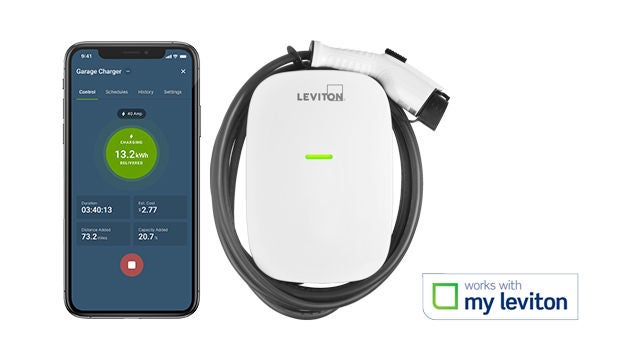
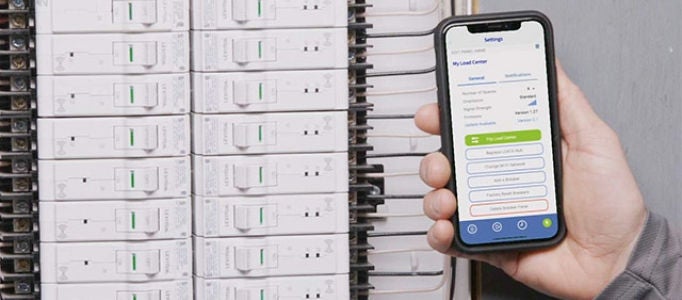
Compatible with the My Leviton App, you can now take control of your entire home, including smart electric vehicle charging, lighting, and load center.
- Schedule charging sessions
- Remotely start/stop charging
- View all smart devices on one dashboard
- View charging status
- Receive fault notifications
- Log charging sessions (charge duration, kW usage, etc.)
The brand that goes beyond the charger...
At Leviton, we don’t just provide EV chargers, we provide the total EV electrical infrastructure

Frequently Asked Questions
Level 1 charging stations are typically provided with an EV purchase and use a J1772 connector. They are rated 120 Volts and can be plugged into a standard NEMA 5-15 household outlet. Level 1 provides the slowest charging time, averaging 5 miles of range per hour of charging.
Level 2 charging stations are the most common type of charging stations in the US and North America, using a J1772 connector. As of 2022, over 85% of public EVSE ports in the US were Level 2. They are rated 240 Volts and charge faster than Level 1, averaging 25 miles of range per 1 hour of charging. Level 2 charging stations are common for homeowners, workplace, and other commercial/public locations.
DC charging stations, often referred to as "Level 3 Charging Stations", use direct-current to provide quick charging. They use CCS connectors (also known as J1772 combo) and CHAdeMO connectors. They are typically rated 208/480 Volts and charge faster than Level 2, averaging 100-200+ miles of range per 30 minutes of charging (or 200-400+ miles of range per 1 hour of charging) and are common at rest stops, gas stations, shopping malls, and other public locations.
| Level | AC or DC | Miles of Range Per 1 Hour of Charging* | Connector Types |
|---|---|---|---|
| Level 1 | AC | 5 | J1772 |
| Level 2 | AC | 25 | J1772 |
| DC (often referred to as Level 3) | DC | 200-400+ | CCS1, CHAdeMO |
*Charging time may vary depending on the vehicle and battery capacity
- AC Charging – AC power is put into the vehicle from a charging station, and then the converter inside the vehicle converts it to DC power.
- DC Charging – the charging station, with a built in convertor, converts AC to DC, and then the vehicle receives DC power directly from the charger, allowing for faster charging. DC Charging is often referred to as Level 3 Charging
To estimate your cost of charging at home, multiply your vehicle's kWh/100 miles figure by the electric rate for the time of day you'll most often be charging. That figure will tell the cost per 100 miles.
Yes! There are many Federal and State rebates and incentives being offered to promote the widespread adoption of electric and other alternative fuel vehicles, including tax breaks, reduced utility rates and more. Whether you are an EV driver or a business owner, see which apply to you.
Resources

How can we help you?
Speak to one of our EV Charging Specialists.