








Electrical Contractor Newsletter | May 2026



More Plugs, More Pressure: Powering Safety in Dorms and Multi-Occupant Spaces
It’s 6:30 a.m. College roommates are getting ready for class. They plug in the coffee pot and their laptops, then one turns on a hair dryer, and suddenly there is no power.
In the 1980s, we took off to college and packed the back seat of our Corollas with a faux-wood alarm clock, a lamp and a big silver boombox, along with our case of Aqua-Net, a crate of books and hot rollers. Dorm room electrical loads looked nothing like they do now.
Today, a dorm room looks more like a NASA command module. Laptops, multiscreen gaming systems, several chargers, smart TVs, mini-fridges, coffee makers, a variety of high-tech beauty tools and, of course, the mini fridge that runs all day and night. Every outlet is working overtime.
Individually, these items aren’t a problem, but together they create heavy electrical demand. When combined with aging buildings and frequently inadequate, dated load electrical infrastructure, tablets, computers, phones and other devices can create an inconvenience with breakers tripping at the most inopportune times, or worse, cause a fire hazard.
May is National Electrical Safety Month, and a great opportunity for contractors to highlight two crucial safeguards protecting people and property, Arc Fault Circuit Interrupters (AFCI) and Ground Fault Circuit Interrupters (GFCI).
AFCI/GFCI Tripping Hazards
AFCIs and GFCIs are similar but serve two different purposes. AFCIs are designed to protect against fire by detecting arc faults. GFCIs are designed to protect people from electrical shock by detecting ground faults.
Arc fault circuit interrupter (AFCI) breakers trip when electrical arcing (or sparking) occurs, which can cause fires due to loose connections, overloaded circuits, or worn or damaged wiring. There are also nuisance tripping situations, when there is interference from appliances such as vacuums or other motorized tools.
Ground fault circuit interrupters (GFCI) are generally installed in areas where moisture is likely, such as bathrooms, kitchens or outdoors and protect people by shutting off power in less than one-tenth of a second before serious injury or electrocution occurs. When a shock or ground fault is detected, the GFCI instantly cuts off power, stopping the flow of electricity.

NEC Codes Changing with the Times
NEC codes have been refined regarding multi-unit living spaces and college dorms. In past years, dormitories were routinely considered dwelling units if they housed more than 16 occupants, which exempted smaller rooms. The 2026 NEC Code further defines the term “dormitories” and includes bedrooms, closets, living areas, and hallways. The updated 2026 code now recognizes individual dorm rooms as guest rooms or suites, requiring them to meet the same safety standards as residential bedrooms, including the proper installation of AFCIs and GFCIs in necessary areas. This update to the NEC code ensures that even with the increased electrical load in today’s dorms, students are protected from potential electrical hazards.
Contractors Have Relied on Leviton for 120 Years
Leviton has been protecting people and buildings from electrical mishaps for 120 years, and this continues in the GFCI and AFCI markets.
As multi-unit living spaces, like dormitories, evolve, so do new construction and retrofit opportunities. Contractors need the best solutions that both make their job easier and enable fast turnaround. Using the best protection devices means fewer callbacks and expedited inspections. Contractors can offer their customers the best electrical solutions for dorms and all other multi-occupant housing units.
Leviton offers exceptional solutions to make dorms safer and with the 2026 NEC code updates, distributors and contractors will have new ways to help their customers update older buildings and construct new ones.
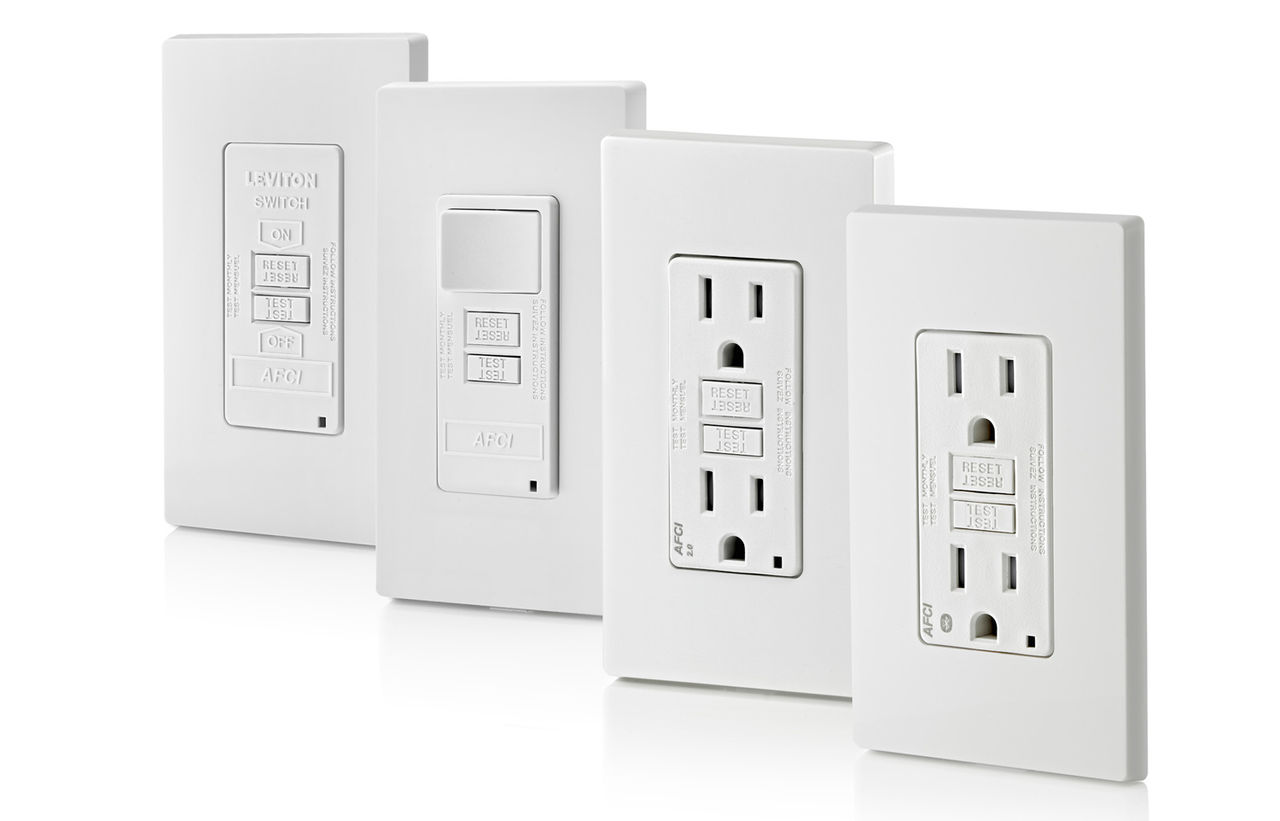
Leviton AFCI Products
Leviton’s AFCI products are industry-leading solutions that help colleges and other multi-housing campuses achieve their fire safety needs.
- Duplex Receptacles include the SmartlockProÒ Outlet Branch Circuit (OBC) AFCI. These offer advanced technology to help with fire protection.
- Blank-Face receptacles are ideal for outlet branch circuits where AFCI protection is required, but where an outlet is not.
- Combination switches provide AFCI protection and the convenience of a single-pole switch to control lighting.
- AFCI Circuit Breakers use advanced technology to protect against fires created from arc-faults.
- Smart AFCI products with Wi-Fi or Ethernet options for remote monitoring, tripping capabilities, and remote firmware updates.
Leviton GFCI Solutions
Leviton’s extensive line of GFCI products offers superior, advanced technology to protect people and property from electrical shock hazards. SmartlockProÒ Self-Test GFCI outlets and circuit breakers meet or exceed NEC code requirements for areas near water sources such as bathrooms, kitchens, and outdoor areas. There are numerous options within the Leviton GFCI protection lineup.
- Standard
- Weather resistant
- Combination GFCI/Switch
- Guide light
- Audible alarm
- Dual-function AFCI/GFCI (DFCI)
- And more
Leviton’s Patent-Pending Lever EdgeÔ GFCI Featuring an intuitive ‘push, click, done’ design, these color-coded devices redefine installation and simplify wiring, which saves contractors time and gives them an advantage over their competition in bid acceptance.
Safer College Campus Life
Colleges and universities across the nation are revamping their electrical infrastructures, and contractors need solutions that keep customers and students safe. Leviton’s AFCI and GFCI products give contractors an opportunity to recommend code-compliant, smarter devices that check all the boxes.
For more information regarding AFCI outlets and breakers visit Leviton AFCI Products. For GFCI outlets and breakers visit Leviton GFCI Products